How Can Forging and Casting Units Track Energy Cost Per Part?
By Nevil Darukhanawala | Series: Forging & Casting Week
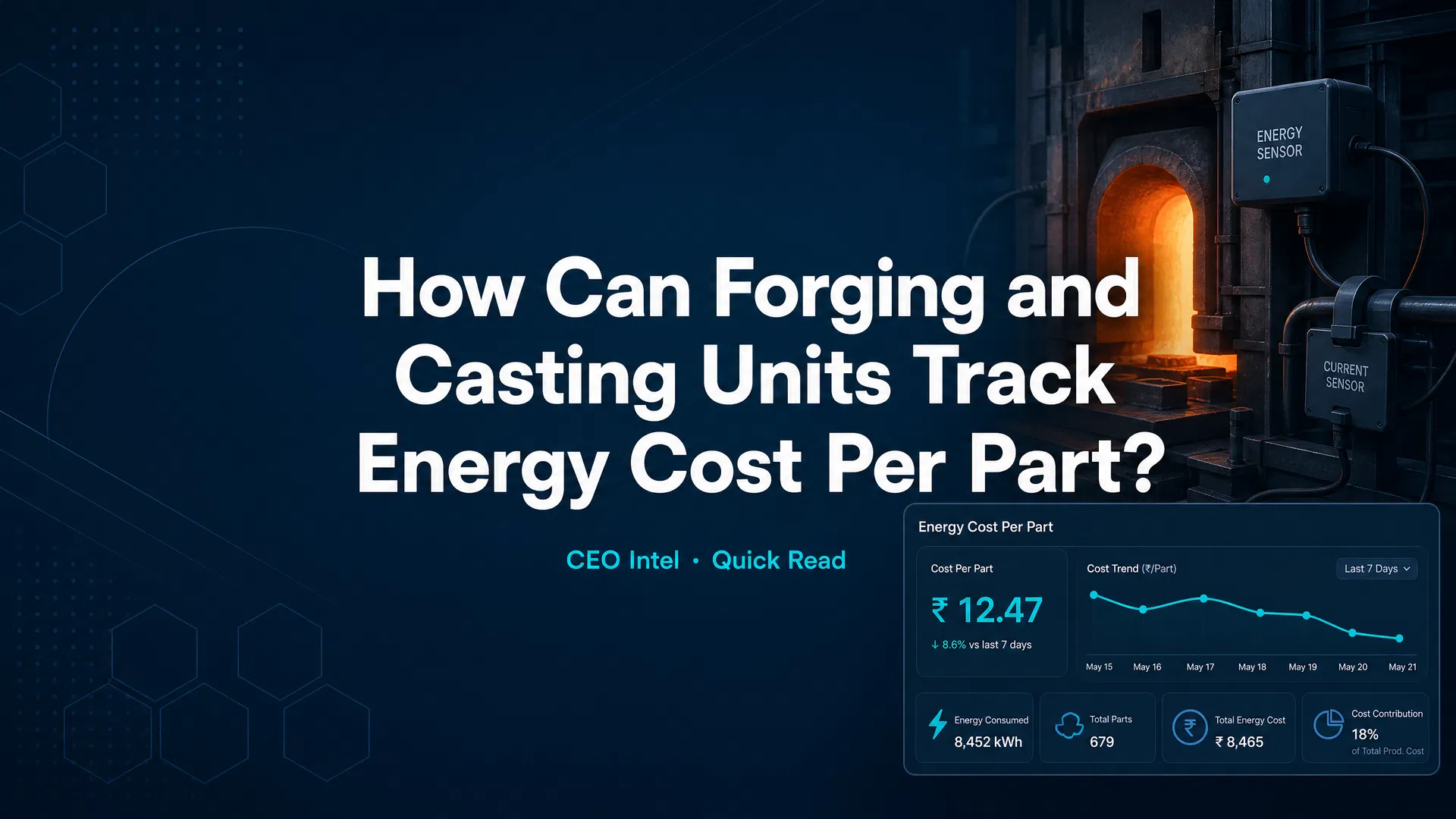
Forging and casting units can track energy cost per part by connecting their energy consumption data to their production data, so that the energy used by each furnace and process is allocated to the parts it produced — rather than seeing energy only as a single monthly bill. Energy cost per part is the share of total energy cost attributable to producing one unit, and tracking it reveals where energy is consumed, wasted, or driving certain products into loss.
This matters because energy is one of the largest costs in forging and casting, yet it is usually visible only as a lump-sum bill that hides where the energy actually goes.
Why a monthly energy bill is not enough
A single monthly energy figure tells a business how much it spent but nothing about how that energy was used. It cannot show energy cost per part or per tonne, which furnace or process consumes disproportionately, how much energy was burned on rejected parts, or how much was wasted on furnaces held hot while idle. All of these leaks are real and separate, but they are indistinguishable inside one total — so they cannot be managed.
What tracking energy per part reveals
Cost per part or per tonne — whether a product’s energy cost matches what was quoted.
Consumption by furnace or process — which equipment is consuming more energy per unit of output.
Energy lost to rejects — power burned producing parts that were scrapped, compounding rejection cost.
Idle and holding waste — energy used by furnaces kept hot while waiting for work.
Trends over time — rising energy intensity that signals a developing efficiency problem.
Why it is hard to see
The data needed sits in separate places: energy in meters and utility bills, production in the production system, and rejects in quality records. Without connecting these, energy cannot be allocated to parts, furnaces, or products, so it remains a single undifferentiated cost.
How it is done effectively
To track energy cost per part, a forging or casting unit connects its energy metering to its production and quality data, allocating energy use to furnaces, processes, and the parts produced. This is the kind of capability a CEO intelligence layer provides: combining energy and production data into a per-part, per-furnace view rather than a monthly lump sum.
Tracking energy cost per part lets a forging or casting business find furnaces and processes consuming disproportionately, quantify the energy wasted on rejects, identify products that are unprofitable on energy cost, and quote work using realistic energy costs — turning its second-largest cost from an unquestionable bill into a managed one.
Part of the Forging & Casting series. See the fuller story in Your Energy Bill Is a Lump Sum Hiding a Dozen Leaks. Related: What Is a CEO Intelligence System?
— BODY ENDS —