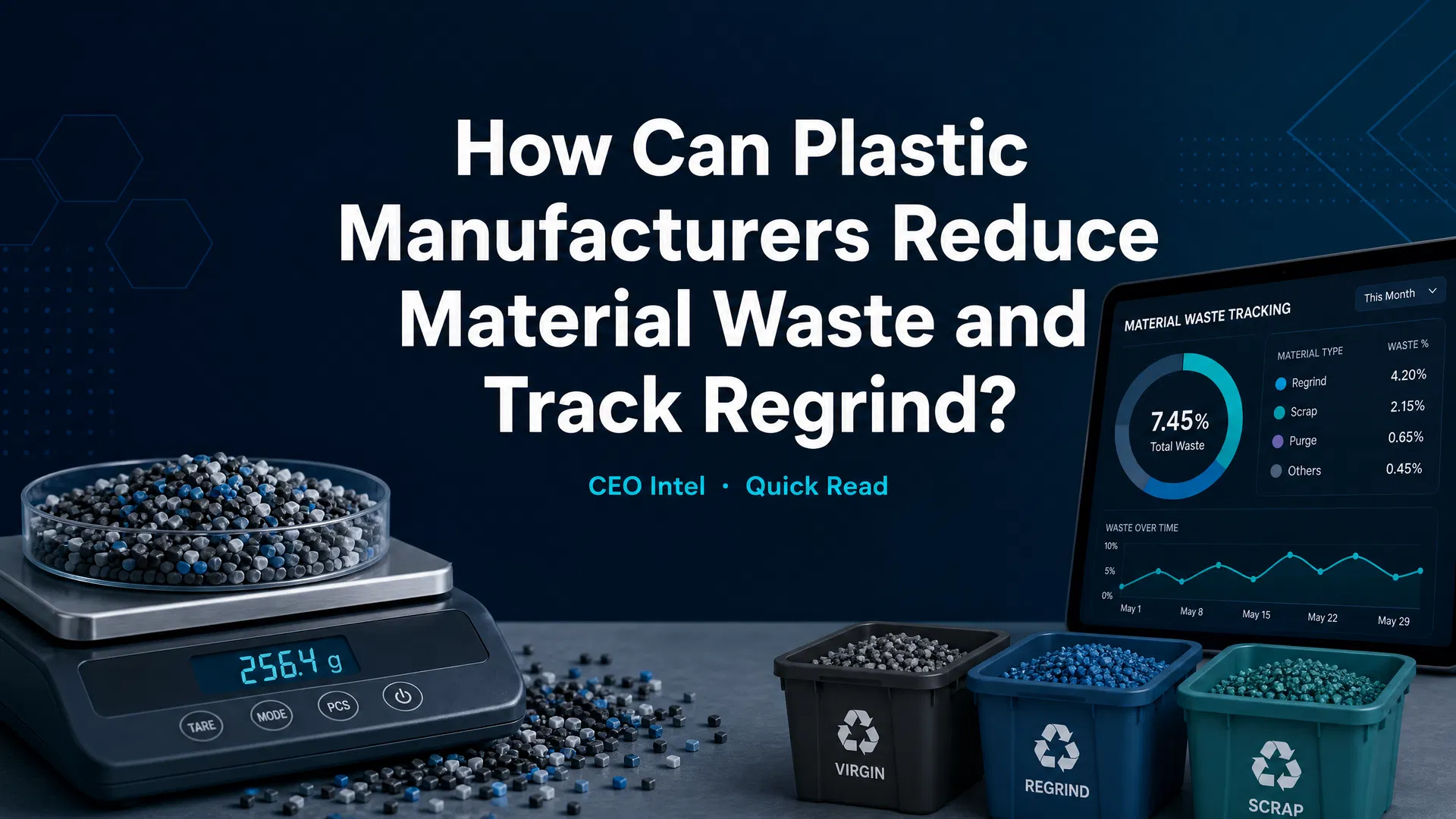
How Can Plastic Manufacturers Reduce Material Waste and Track Regrind?
By Nevil Darukhanawala | Series: Plastics Week
Plastic manufacturers can reduce material waste by measuring how much raw material becomes saleable product versus loss, and tracking regrind — the reusable material from runners, sprues, and scrap — so it is reused instead of forgotten while virgin material is bought unnecessarily. Material yield is the share of purchased polymer that ends up as product, and because resin is the dominant cost in moulding, improving yield and reusing regrind directly protect margin.
This matters because material is most of the cost in injection moulding, so waste and unused regrind represent significant, often invisible, losses.
Where material is lost in moulding
Runners and sprues — material that is part of every shot but not part of the finished part.
Rejects — parts lost to quality issues, taking their material with them.
Startup scrap — the first shots after a setup or changeover, before the process stabilises.
Purgings — material lost during colour or material changes.
Much of this can be recovered as regrind, but only if it is collected, tracked, and reused appropriately.
The regrind opportunity — and how it is missed
Regrind is reusable material that reduces the virgin polymer a manufacturer needs to buy. The saving is only realised if regrind is tracked — what is available, of which grade — and matched to suitable jobs. In many operations, regrind management is loose: regrind is generated and piled up, then either under-used (so virgin material is bought while regrind sits) or used in the wrong places (risking quality). As a result, manufacturers often buy polymer they did not need while paid-for regrind sits unused.
What good waste and regrind tracking involves
True material yield — how much purchased material becomes product, by job and machine.
Waste by source — runners, rejects, startup scrap, and purgings identified separately.
Regrind inventory — what regrind is available, of which grade, kept current.
Regrind reuse — matching available regrind to suitable jobs to offset virgin purchases.
How it is done effectively
To reduce waste and track regrind, a manufacturer connects material purchase, production, and scrap data so that yield, waste sources, and regrind availability are visible, and virgin purchasing can be offset by regrind on hand. This is the kind of capability a CEO intelligence layer provides: turning scattered material data into a clear view of where polymer is lost and where regrind can replace virgin material.
Tracking material this way lets a moulder cut waste at its largest sources, reuse regrind instead of buying virgin material unnecessarily, and protect the single biggest cost in the business.
Part of the Plastics & Injection Moulding series. See the fuller story in Your Margin Moves Every Day With the Resin Price. Can You See It? Related: What Is a CEO Intelligence System?
— BODY ENDS —